Drafting for Grass: Why Big Servers Dominate
Strategy • May 2026
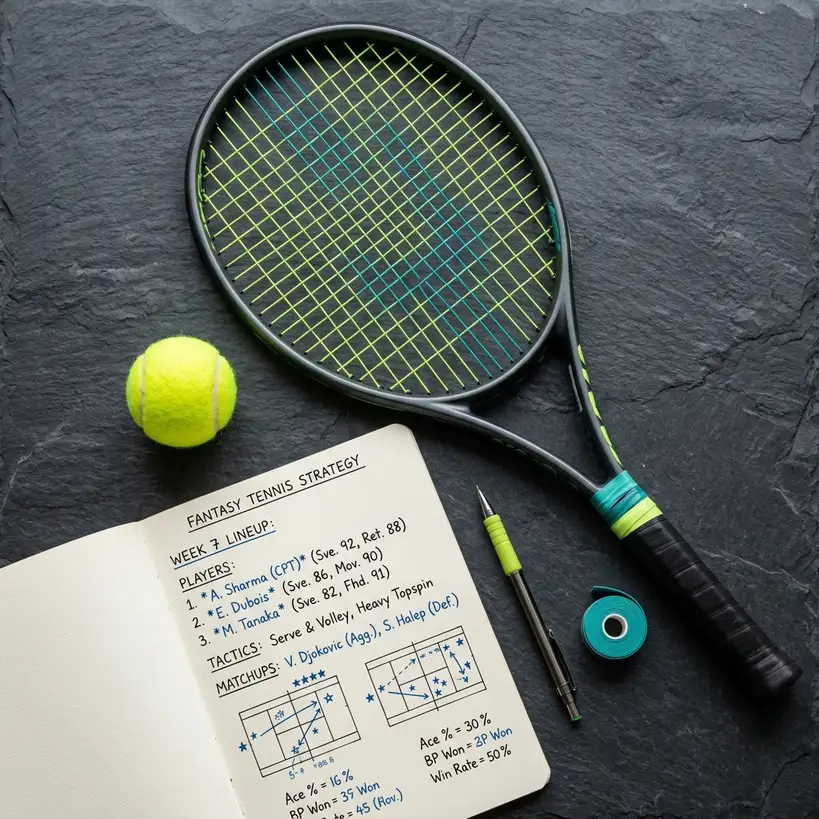
The transition from the slow, grinding clay courts of Roland Garros to the lightning-fast grass of Wimbledon is the most jarring shift in the tennis calendar. For fantasy managers, it requires an immediate change in drafting strategy. If your team is built around baseline grinders and return specialists, you're going to bleed points in June and July.
The Value of the Ace
In the CardOscillation scoring system, an Ace is worth +0.5 points. While that may seem small compared to a match win (+25 points), big servers on grass routinely hit 20-30 aces in a best-of-five match. That's a massive 10-15 point swing just from one statistical category.
Holding Serve is Mandatory
Because returning on grass is so difficult due to the low bounce, holding serve becomes the baseline expectation. A player who gets broken frequently will be heavily penalized (-1.5 points per break). Big servers are statistically much less likely to be broken on grass, providing a safe "floor" for your fantasy points.
Tiebreaks are Inevitable
When two big servers clash on grass, sets often go to tiebreaks. While this can be nerve-wracking for a manager, it also means more games played per set, which translates to more opportunities for Aces and Winners without the risk of being broken.
The Verdict
When drafting for the grass-court swing, prioritize players with a high First Serve Percentage and a high Ace count. Look for players who have historically performed well in Stuttgart, Halle, Queen's Club, and Wimbledon. Leave the clay-court specialists on the waiver wire until the hard-court season begins.
← Back to Blog